5 Signs Your Land Deed (Dalil) Is Fake. Bangladesh land buying guide
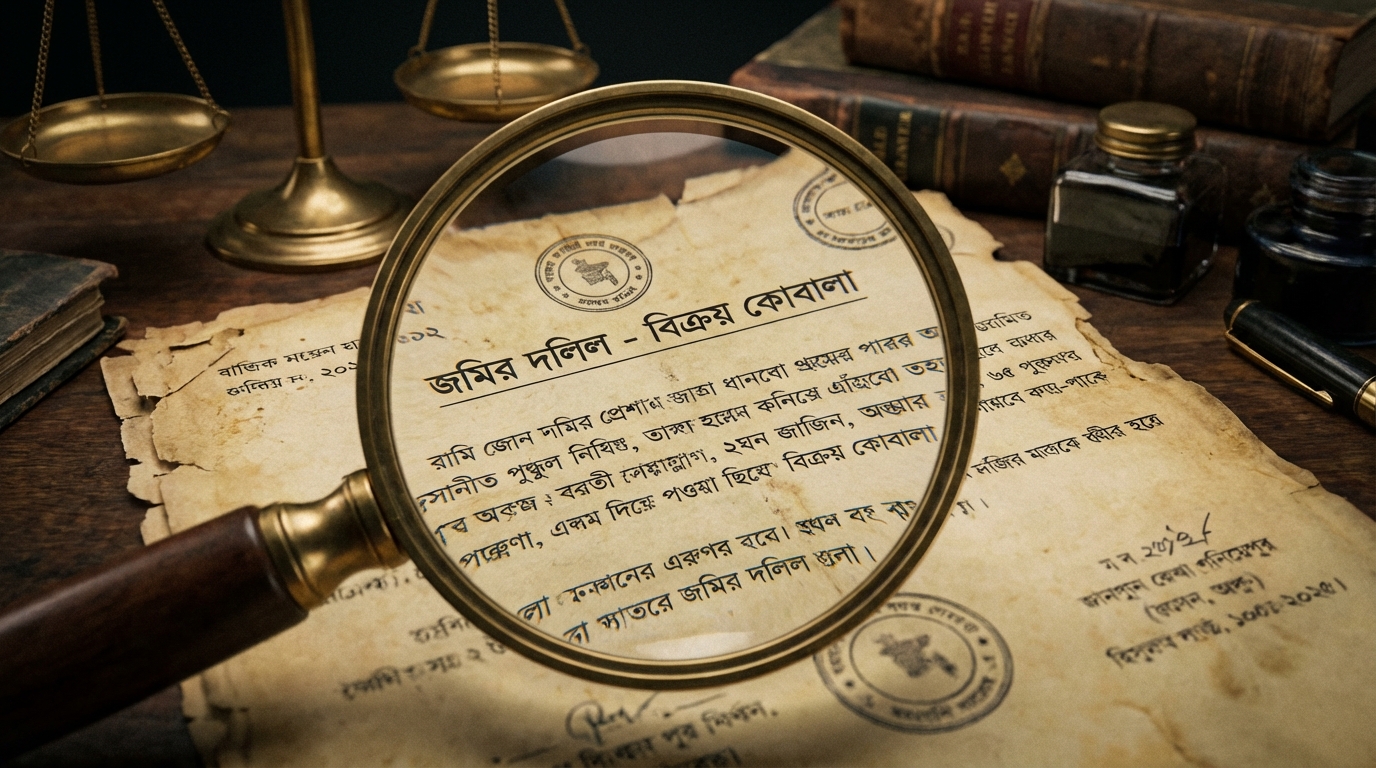
Buying land in Bangladesh is high stakes. It is often a family’s entire life savings—50 Lakh, 1 Crore, or more—handed over in exchange for a few sheets of paper.
But here is the terrifying reality: According to industry estimates, nearly 30-40% of land documents floating around in Dhaka’s periphery are either forged, manipulated, or legally void.
Scammers know you are emotional about buying that plot in Purbachal or Bashundhara. They rely on your ignorance. They hand you a shiny "Original Deed," take your money, and disappear. Years later, when you go to build a wall, someone else shows up with another original deed.
Don't let this happen to you. Before you hand over a single Taka, use this 5-point checklist—used by top property lawyers—to spot a fake deed instantly.
Sign #1: The "Online Silence" (No Record Found)
In 2026, the Bangladesh Government has digitized a massive portion of land records. If a seller gives you a Deed Number or Mutation Case Number, it must exist in the digital database.
The Test:
-
Take the Mutation Khatian Number from the deed.
-
Visit land.gov.bd or eporcha.gov.bd.
-
Search for the Khatian.
The Red Flag: If the website says "No Record Found" or the owner's name on the screen is different from the person selling to you, stop immediately. While not all old records are digitized, a complete absence of a modern mutation record is a 90% indicator of a scam.
Sign #2: The "Ghost" Baya Deed (Broken Chain of Ownership)
A legitimate land owner must prove how they got the land. This history is called the "Baya" Deed (Chain of Ownership).
-
Did they buy it? (Sale Deed)
-
Did they inherit it? (Waris/Succession Certificate)
-
Did the government give it? (Allotment Letter)
The Red Flag: If the seller shows you their deed but "cannot find" the previous owner's deed (the Baya Dalil), run. A common scam is to forge the current deed without creating the history behind it. A lawyer will always demand the last 25 years of Baya Deeds to ensure the chain is unbroken.
Sign #3: The "Magic" Mutation (Namjari)
You cannot sell land without a valid Mutation (Namjari) in your own name. Scammers often show you the previous owner's mutation or a fake DCR (Duplicate Carbon Receipt) receipt to claim "processing is ongoing."
The Checklist:
-
Does the Mutation Khatian have the current seller’s name?
-
Is the Land Development Tax (Khajna) paid up to the current Bengali year (1432)?
The Red Flag: If the Khajna receipt is handwritten and looks "too new" or unofficial, it is likely fake. Always verify the tax payment status online at ldtax.gov.bd.
Sign #4: The Power of Attorney Trap
Many "Sellers" are actually middlemen holding a Power of Attorney (Am-Moktar Nama).
-
Is it Registered? A Notary Public affidavit is not enough for selling land. It must be a registered Power of Attorney.
-
Is the Owner Alive? If the original landowner dies, the Power of Attorney automatically expires. Scammers often sell land using an old Power of Attorney after the real owner has passed away.
The Red Flag: The seller gets angry or defensive when you ask to meet the original land owner.
Sign #5: Physical Anomalies (The Eye Test)
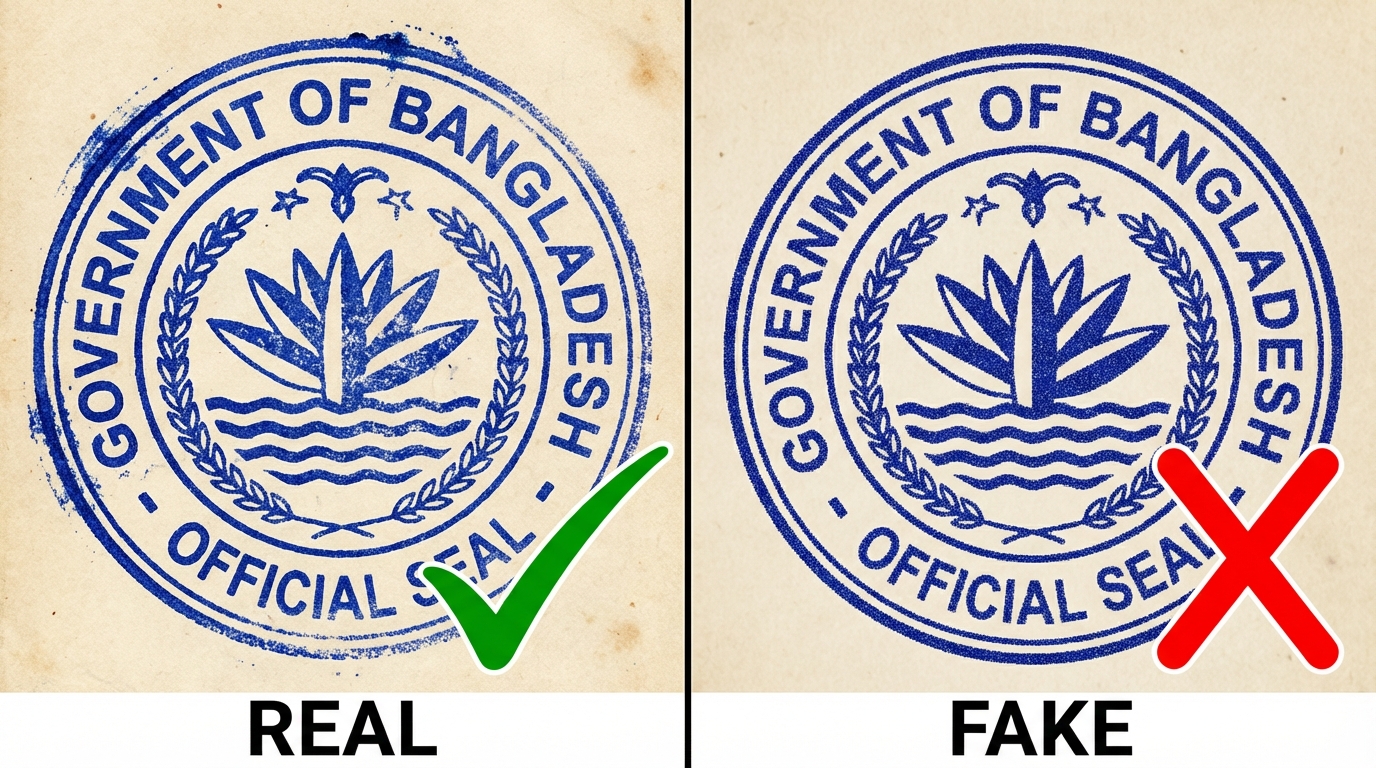
Sometimes, the forgery is lazy. Authentic deeds in Bangladesh are printed on specific non-judicial stamp papers.
The Checklist:
-
Date Mismatch: Check the date printed on the back of the stamp paper (the vendor’s endorsement). Is it after the date the deed was supposedly signed? (e.g., Deed signed in 2020, but stamp paper bought in 2021). That is physically impossible and a clear fake.
-
Registration Seal: Look at the round seal of the Sub-Registrar. Is it blurry? Does the ink look like a computer printout rather than a wet ink stamp?
🛑 Don't Gamble 50 Lakhs to Save 5,000 Taka
You wouldn't buy a car without a mechanic checking the engine. Why buy land without a lawyer checking the papers?
A verified land lawyer or surveyor can dig up the "Volume Number" from the Sub-Registrar's office and confirm if the deed is real. They charge a tiny fraction of the property value to give you total peace of mind.
The Final Step: Physical Possession Jomi Dokhol
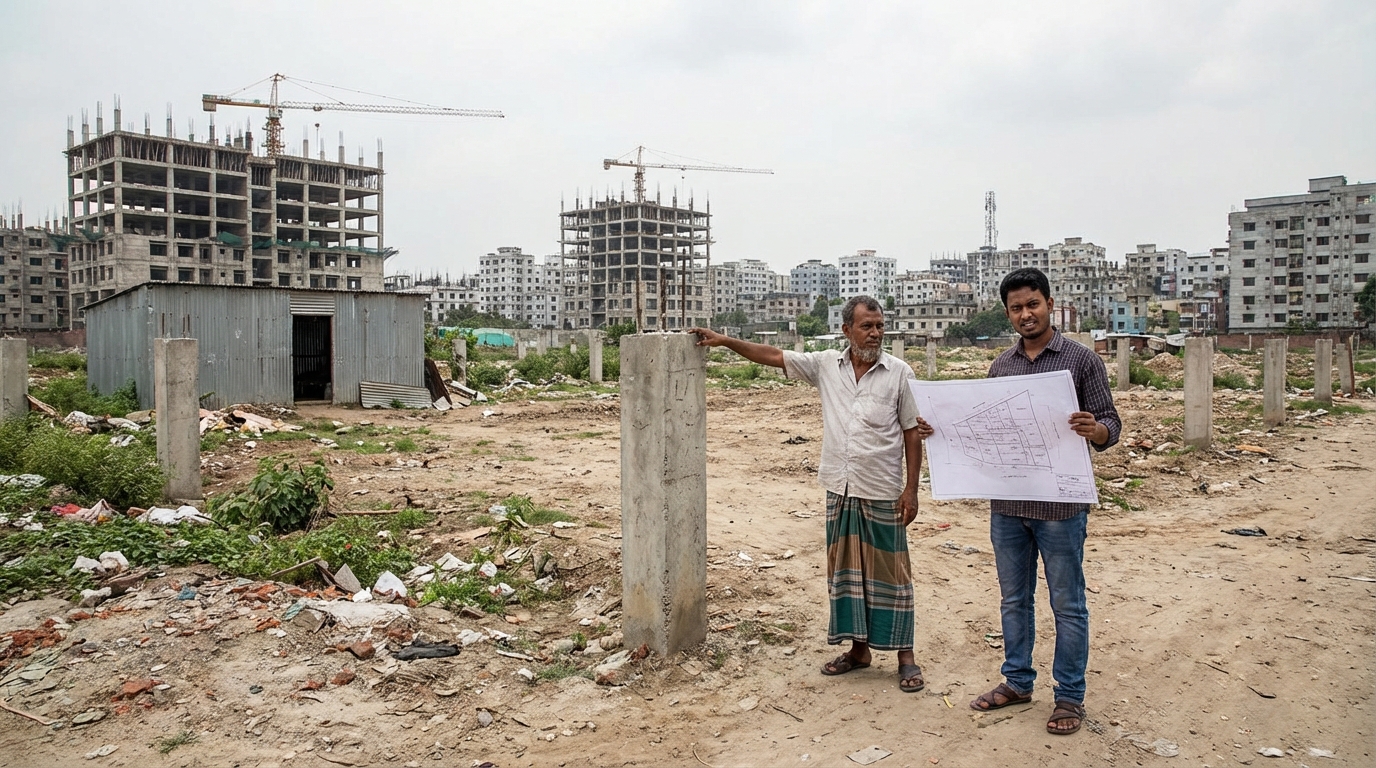
Paperwork is only half the battle. "Dokhol" (Possession) is 90% of ownership. Even if the deed is real, if someone else is squatting on the land, you are buying a lawsuit, not a property.
What to do:
-
Go to the land physically.
-
Talk to the neighbors (not the ones the seller introduces you to).
-
Ask the local tea stall owner: "Who owns this plot?"
If the papers say "Mr. Rahim" but the neighbors say "This is Mr. Karim's land," believe the neighbors and hire a lawyer immediately.
👉 Get a Lawyer to Check Your Deed on Getlancers (Categories: Business Legal Services)

Write a Comment